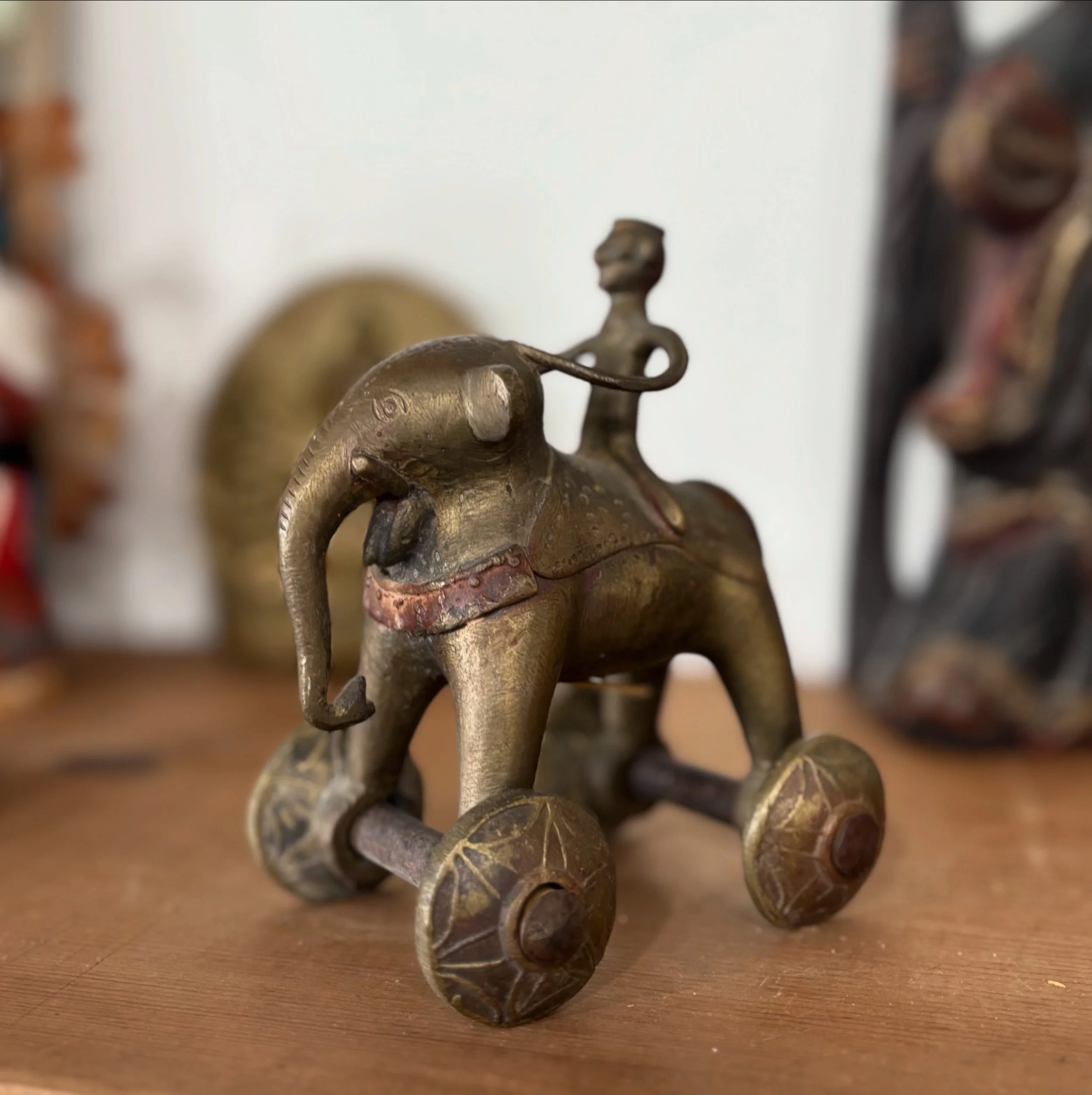
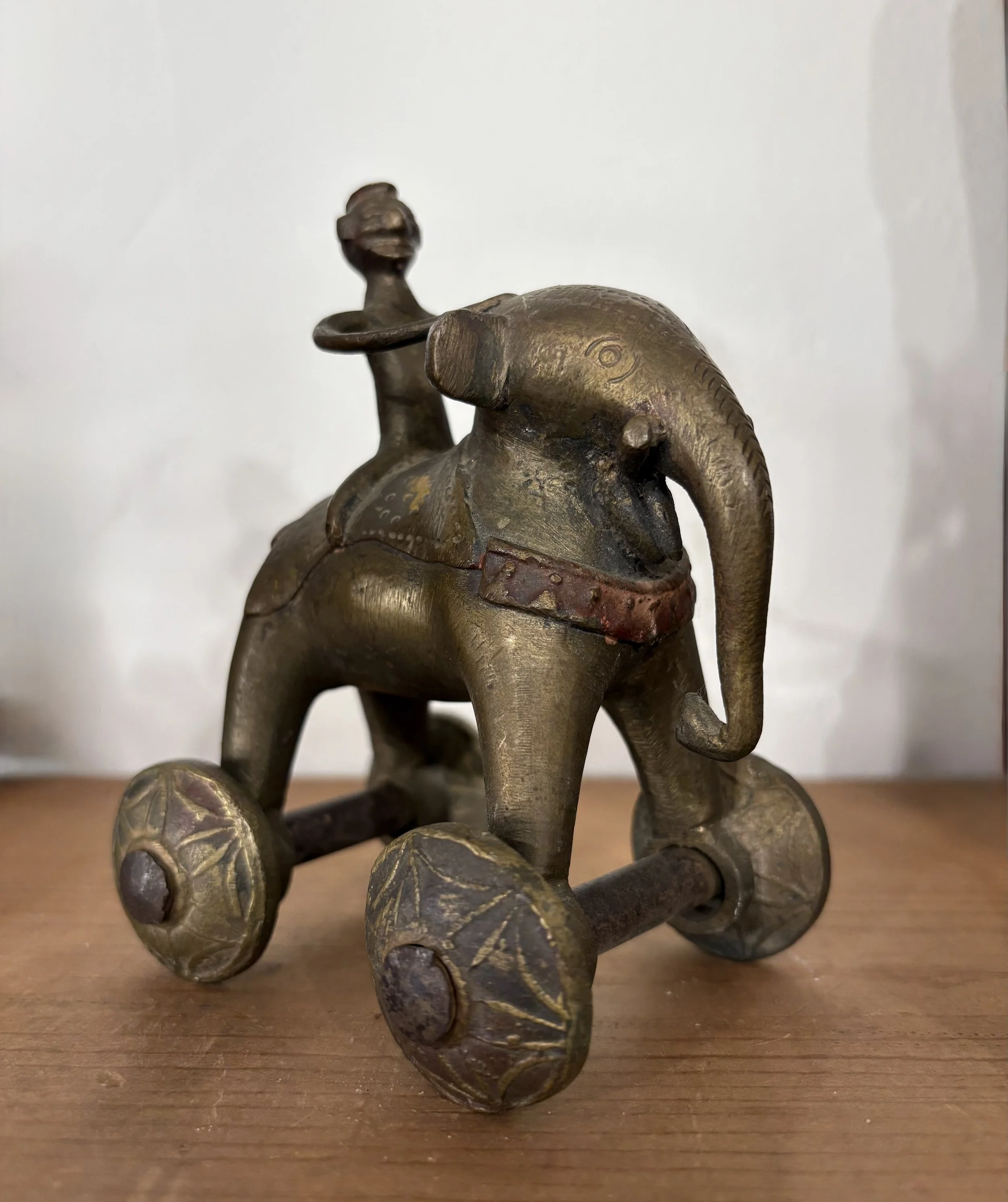
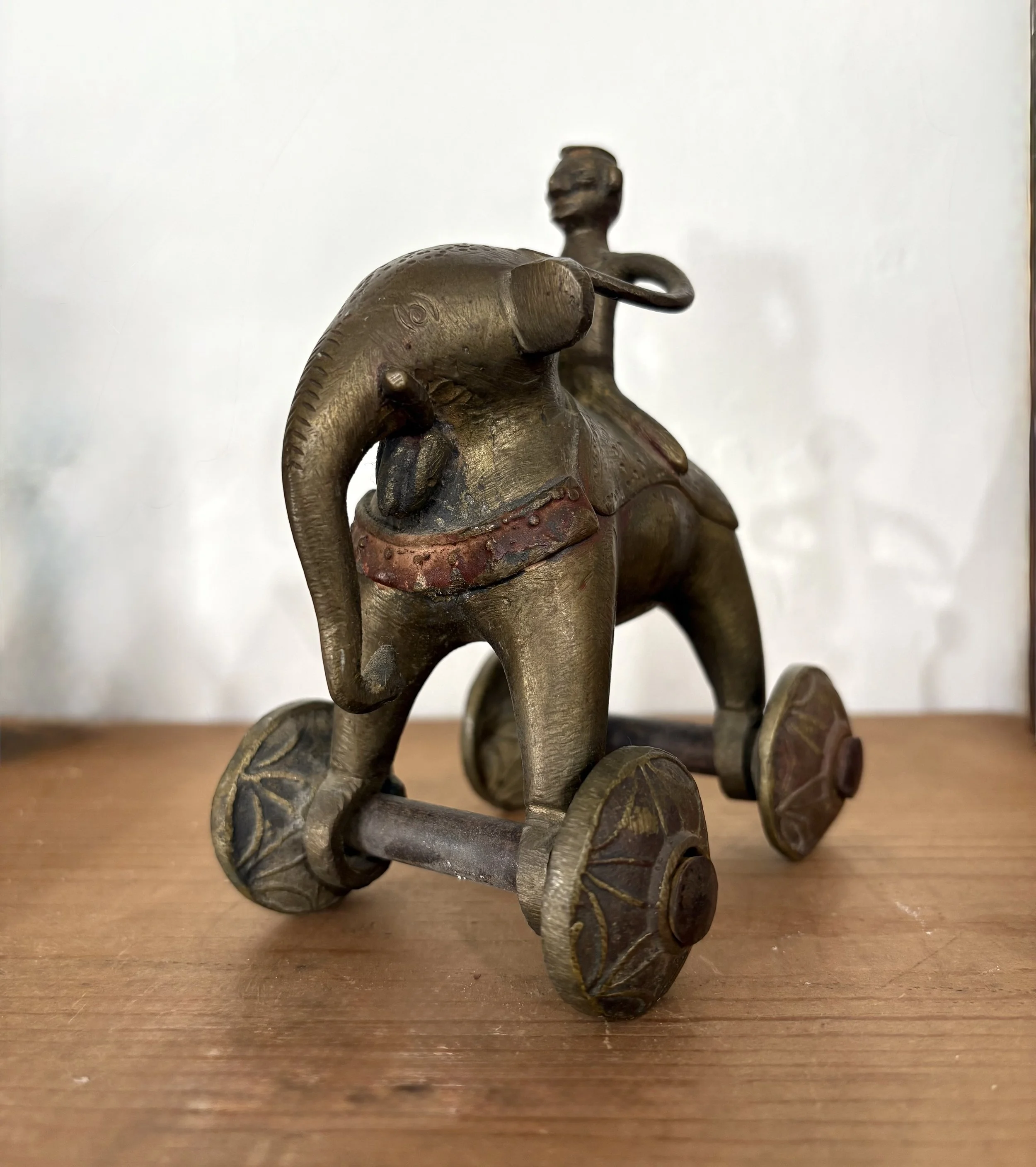
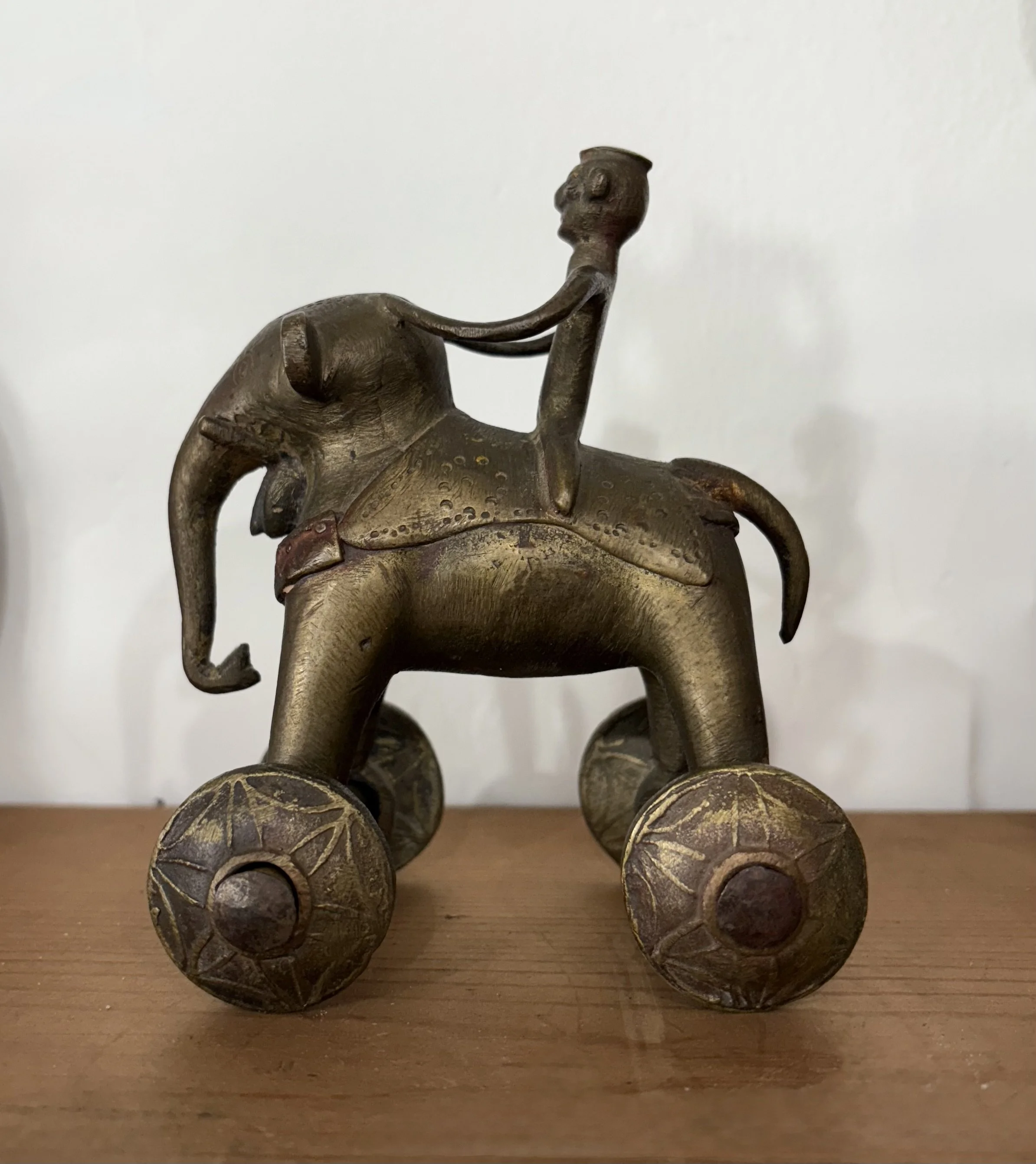
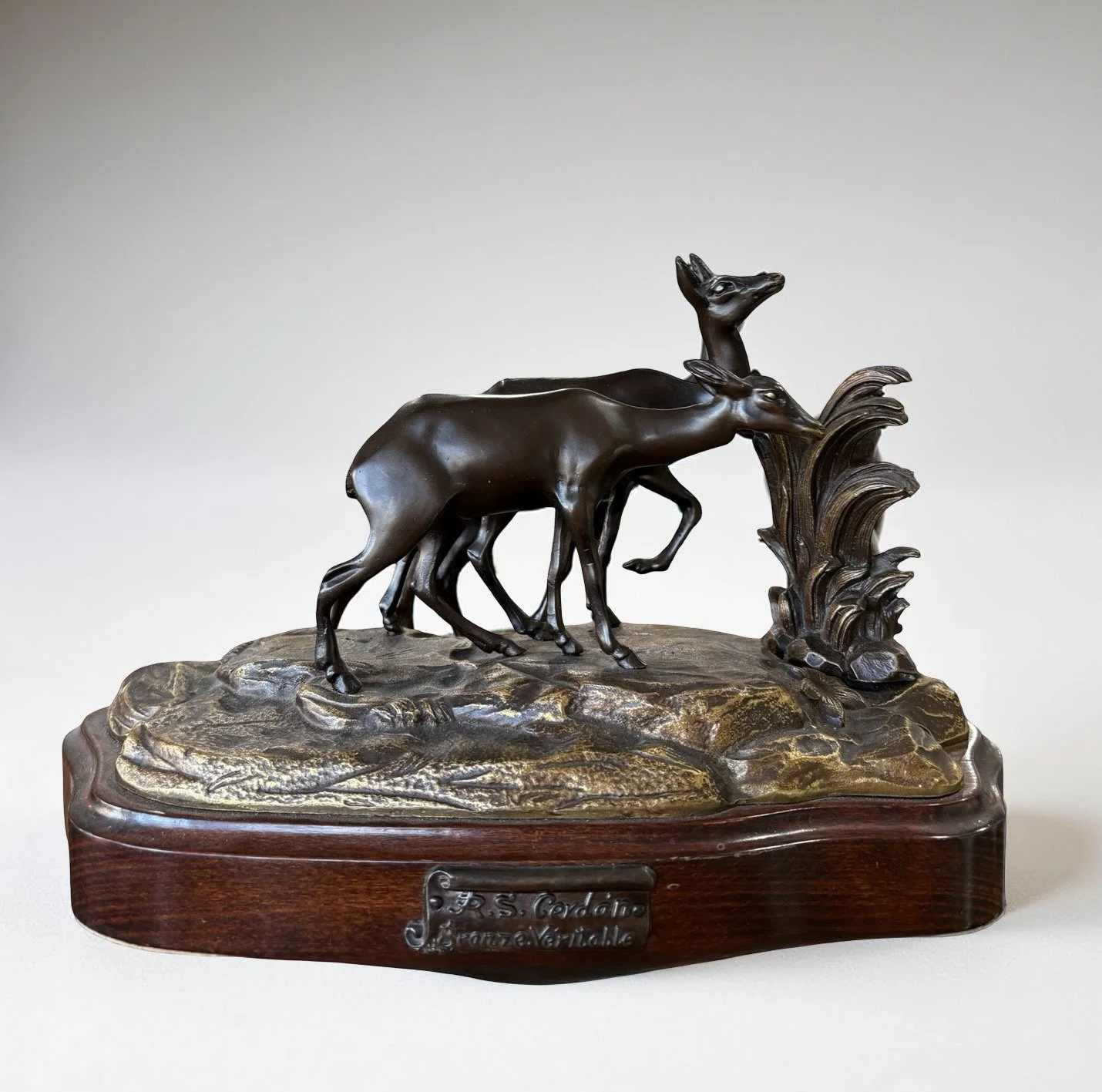
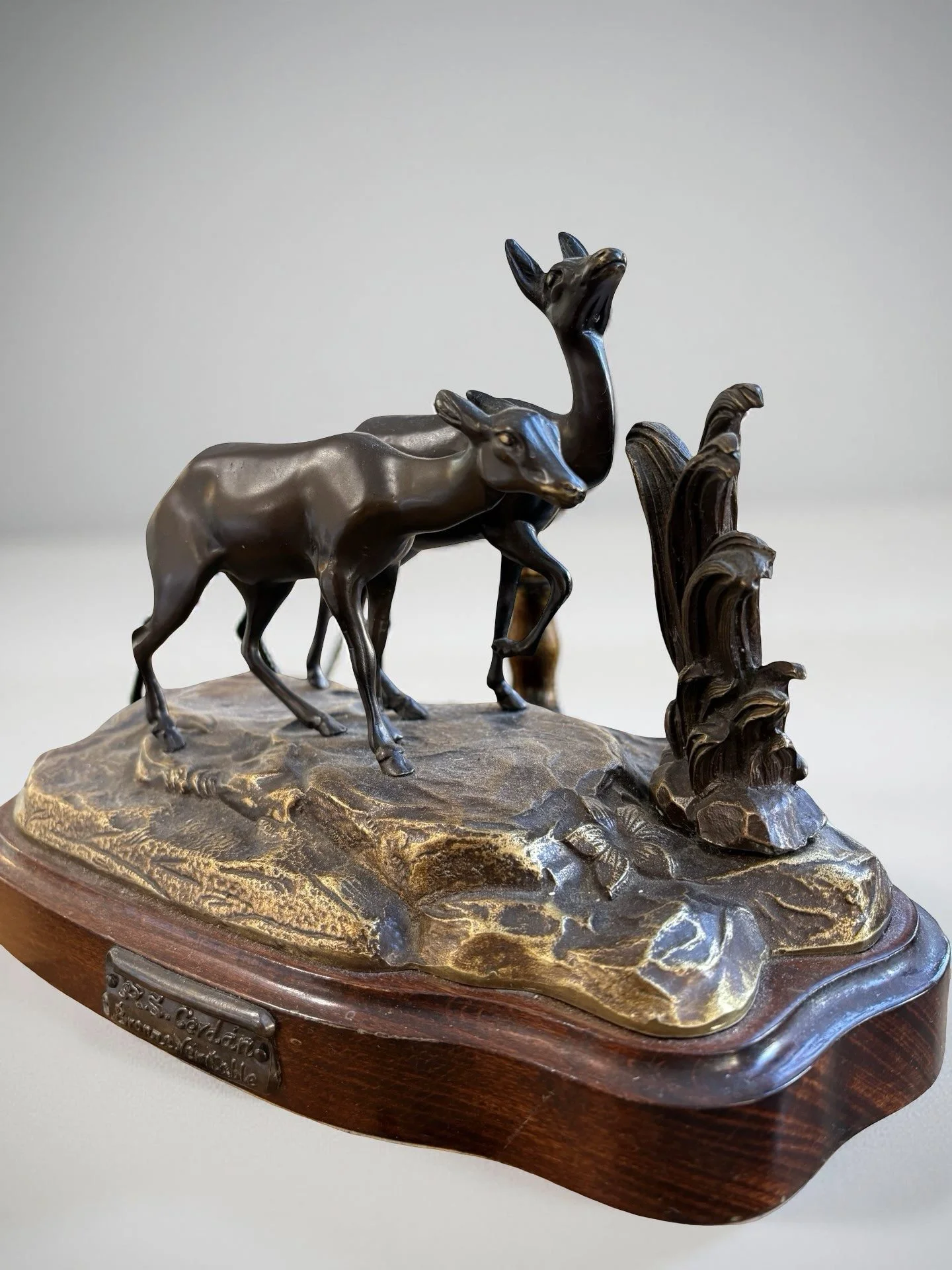
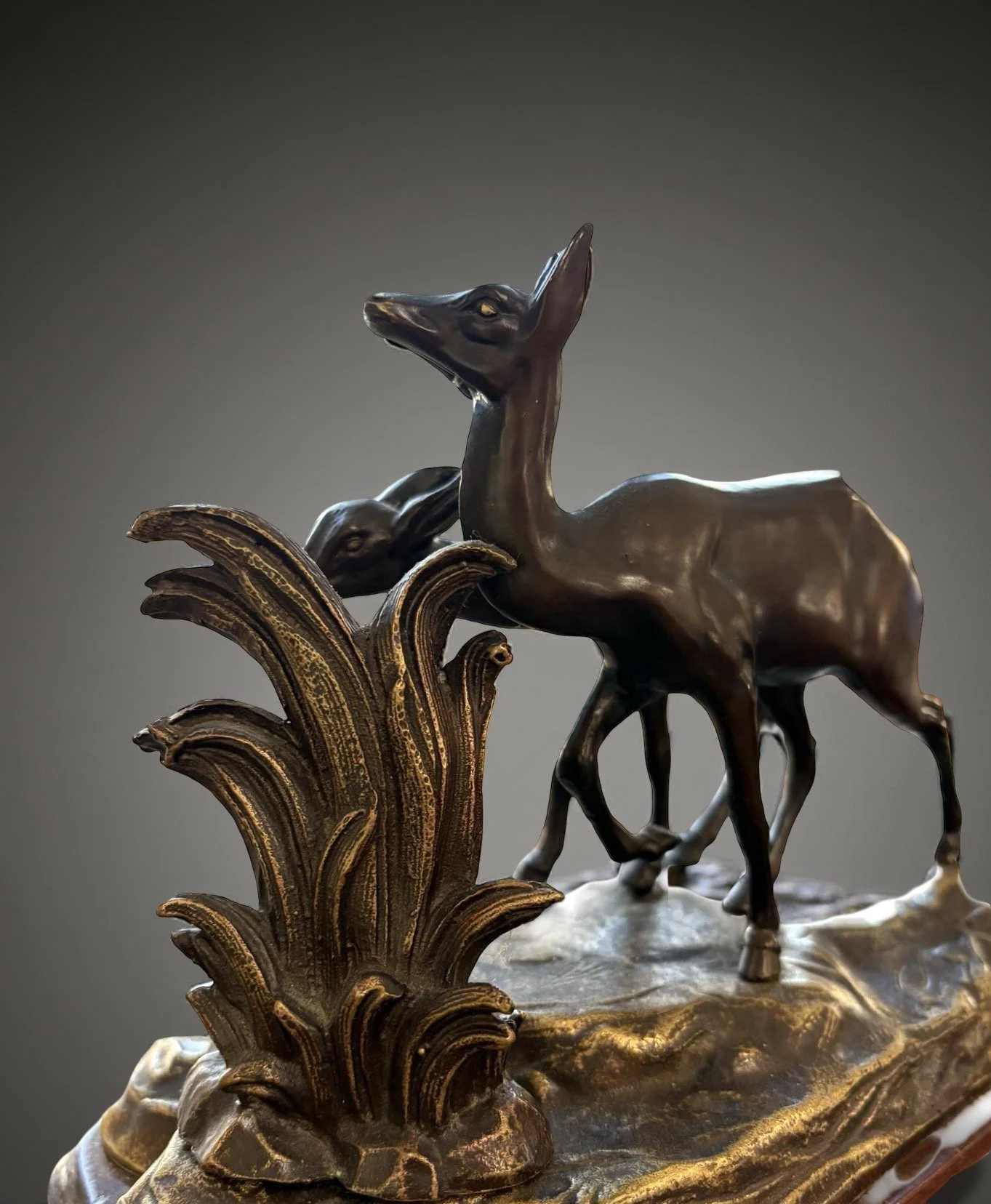
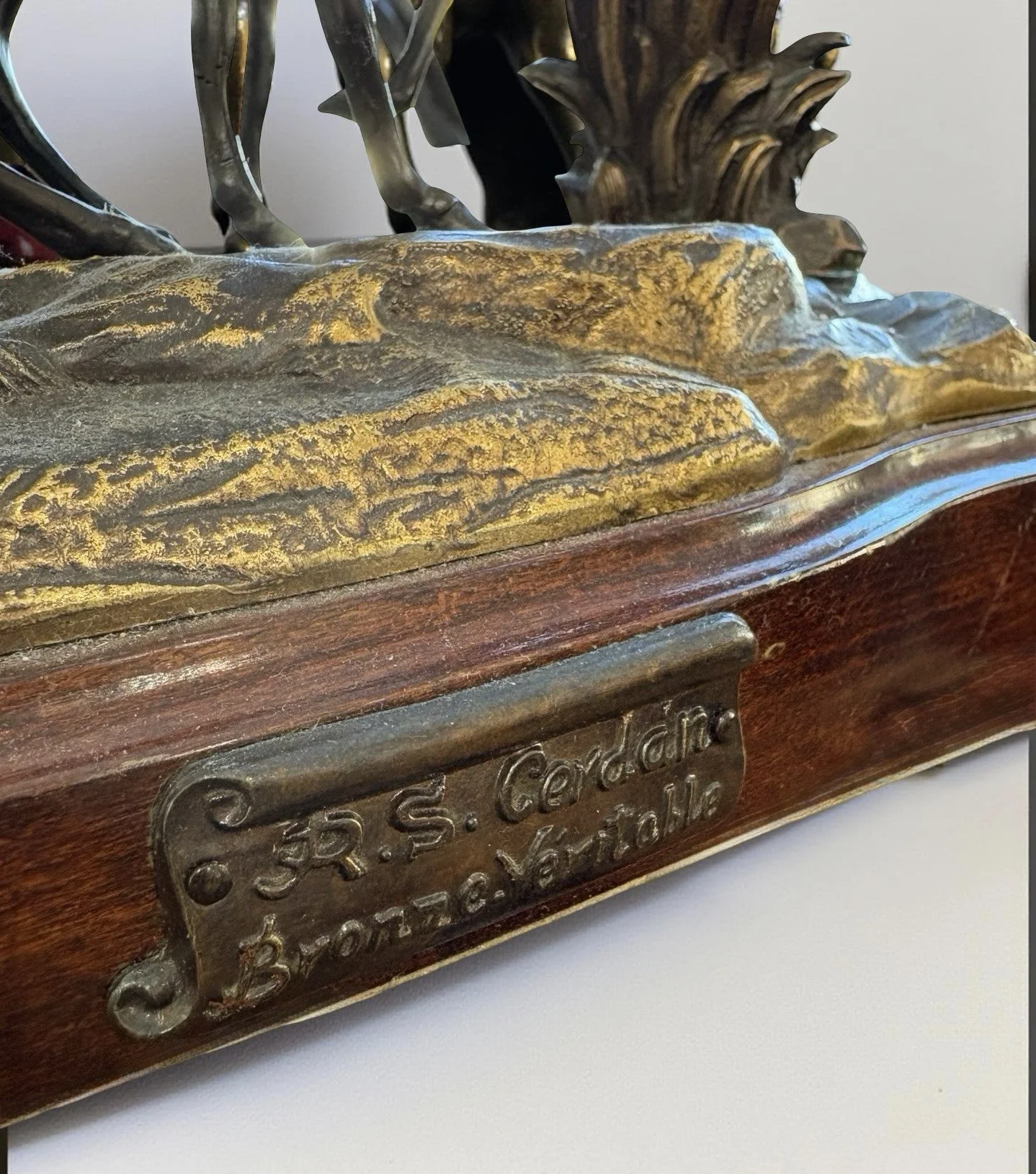
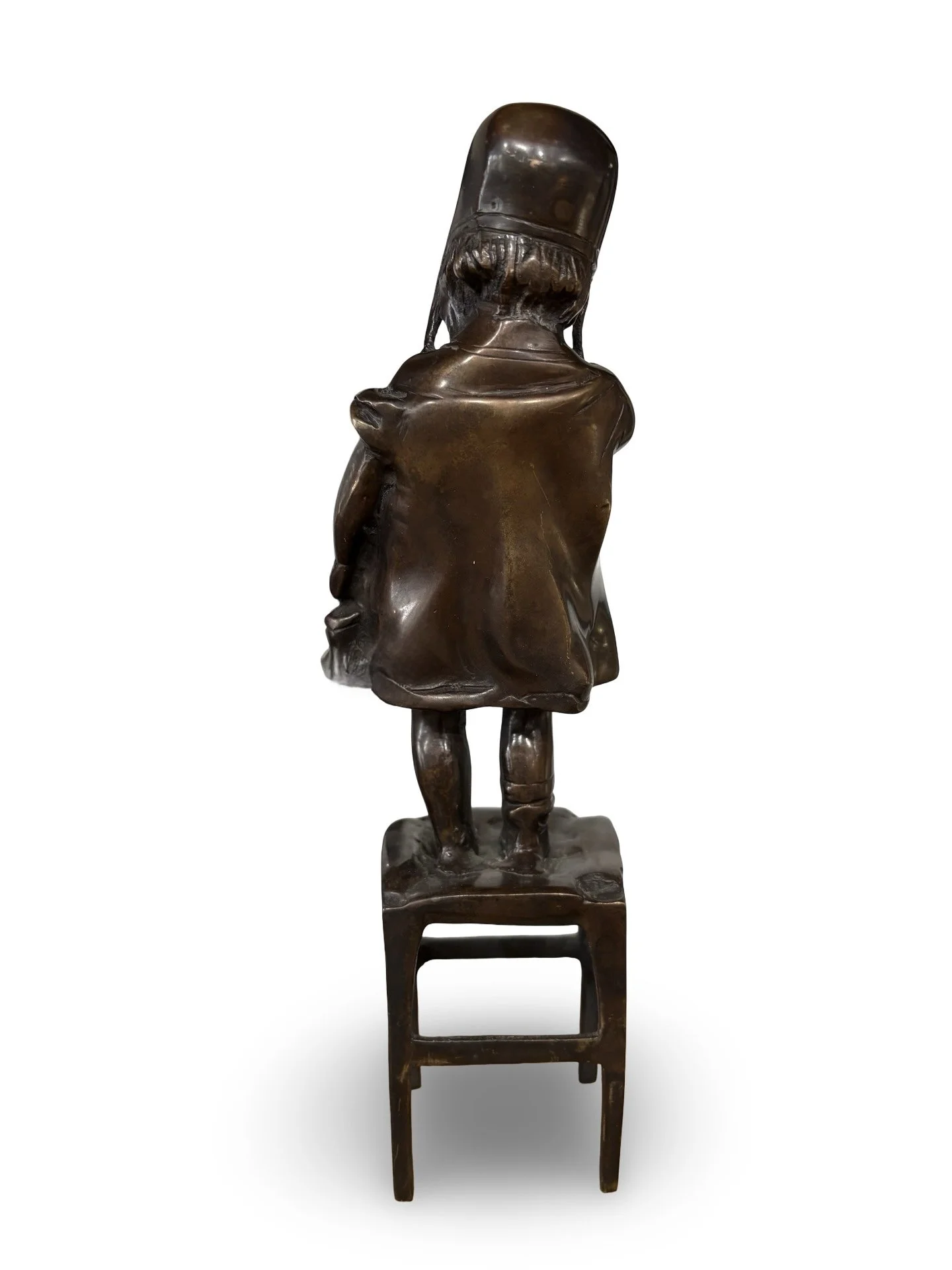
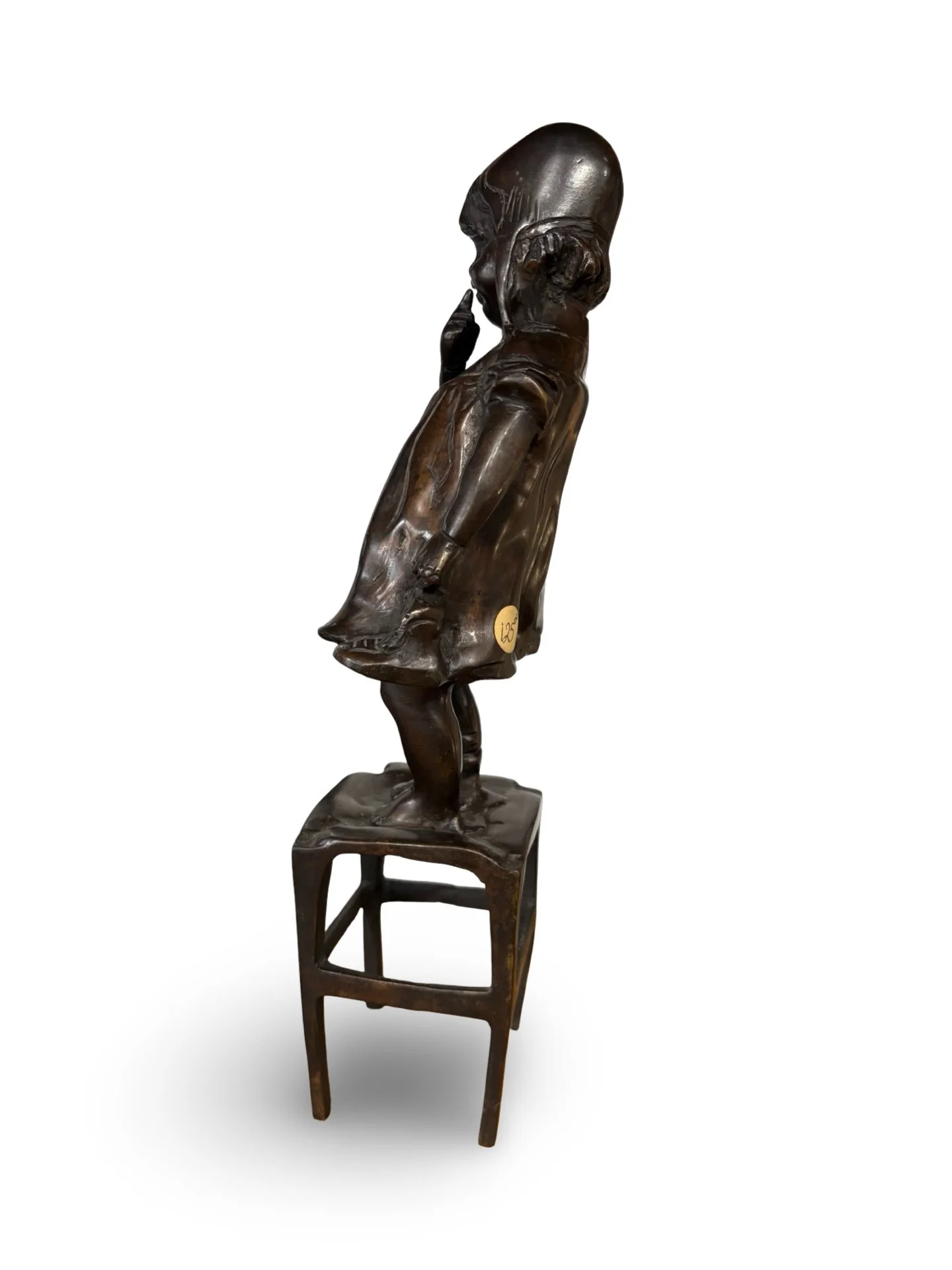
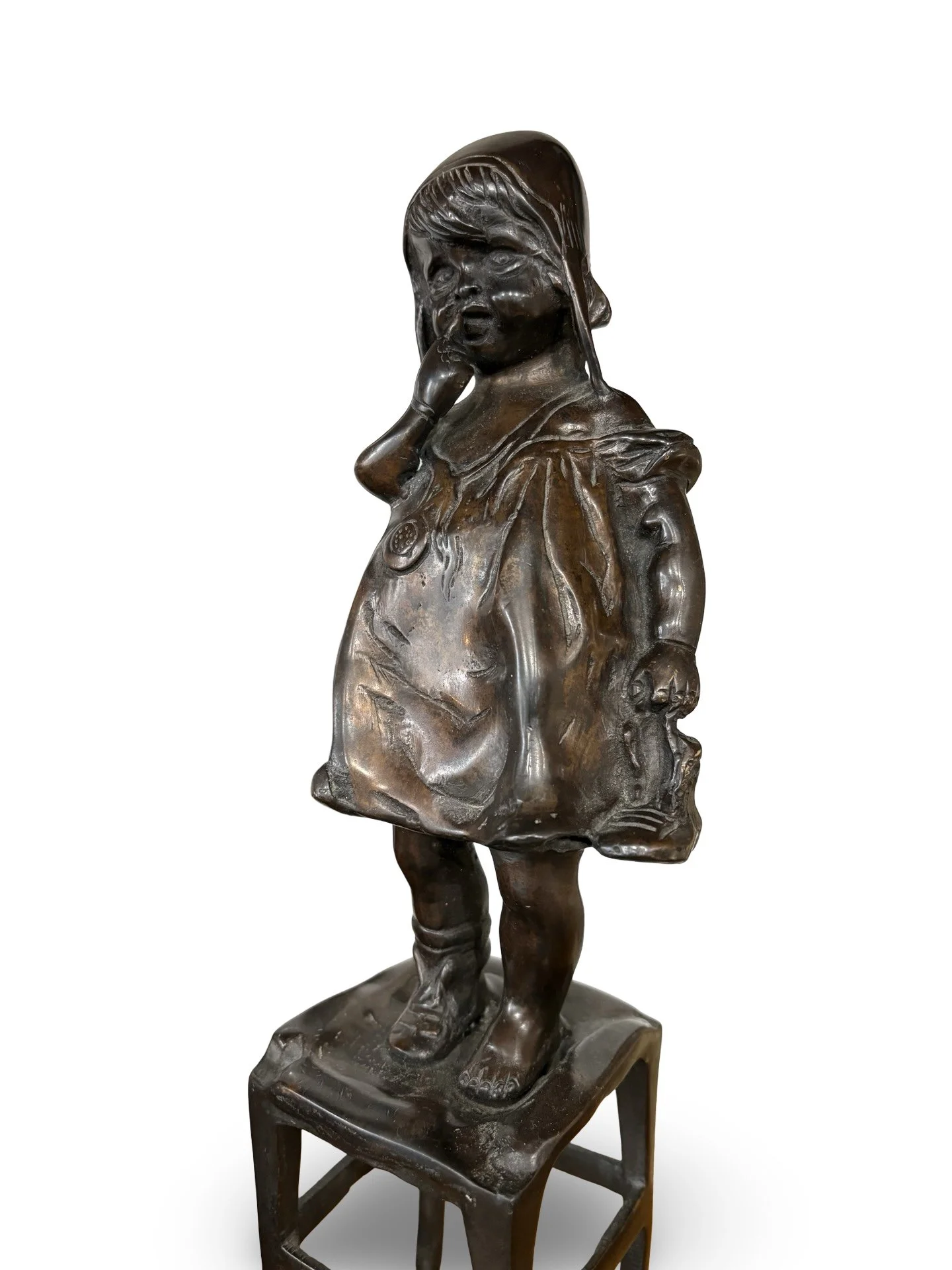
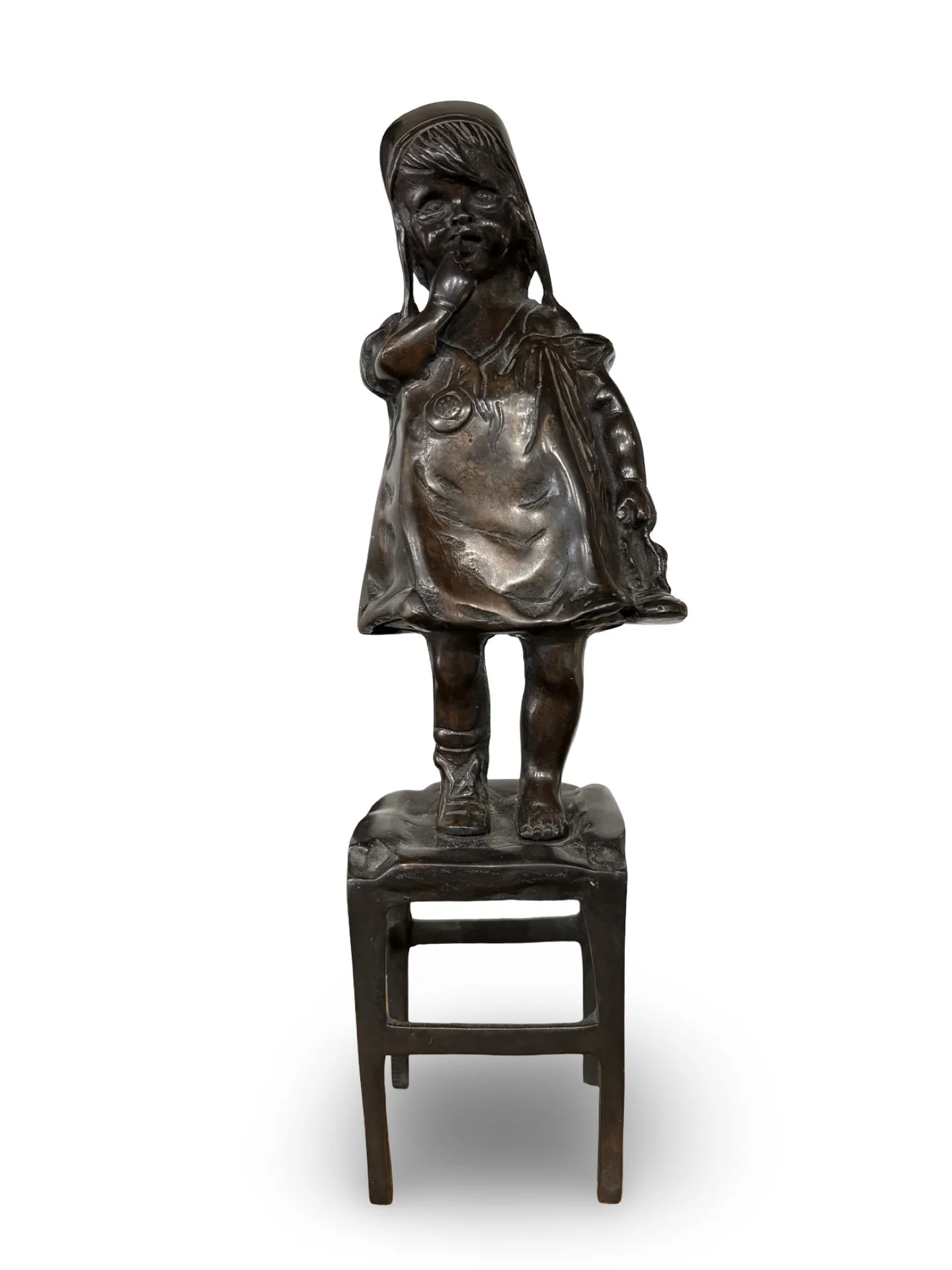
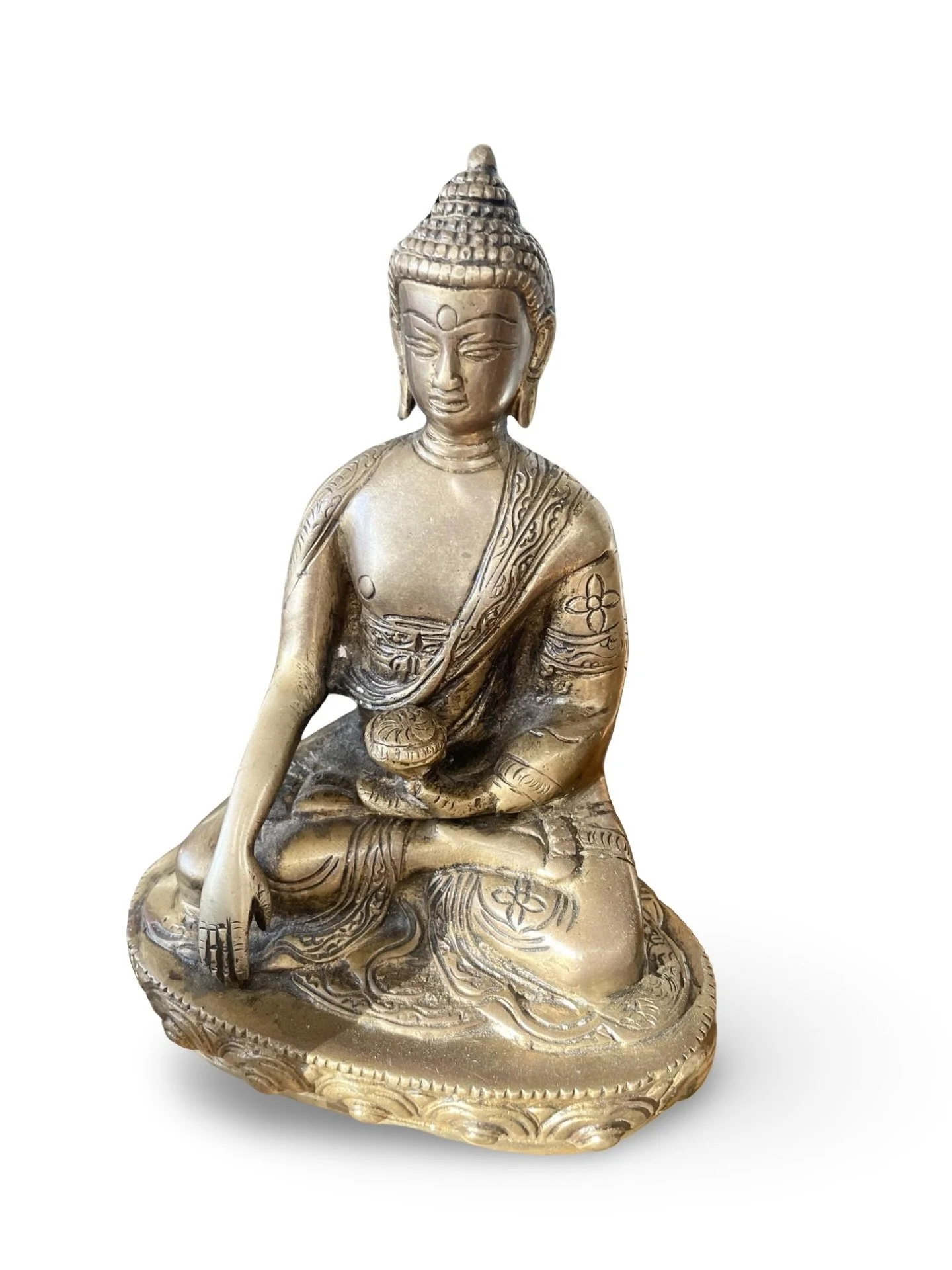
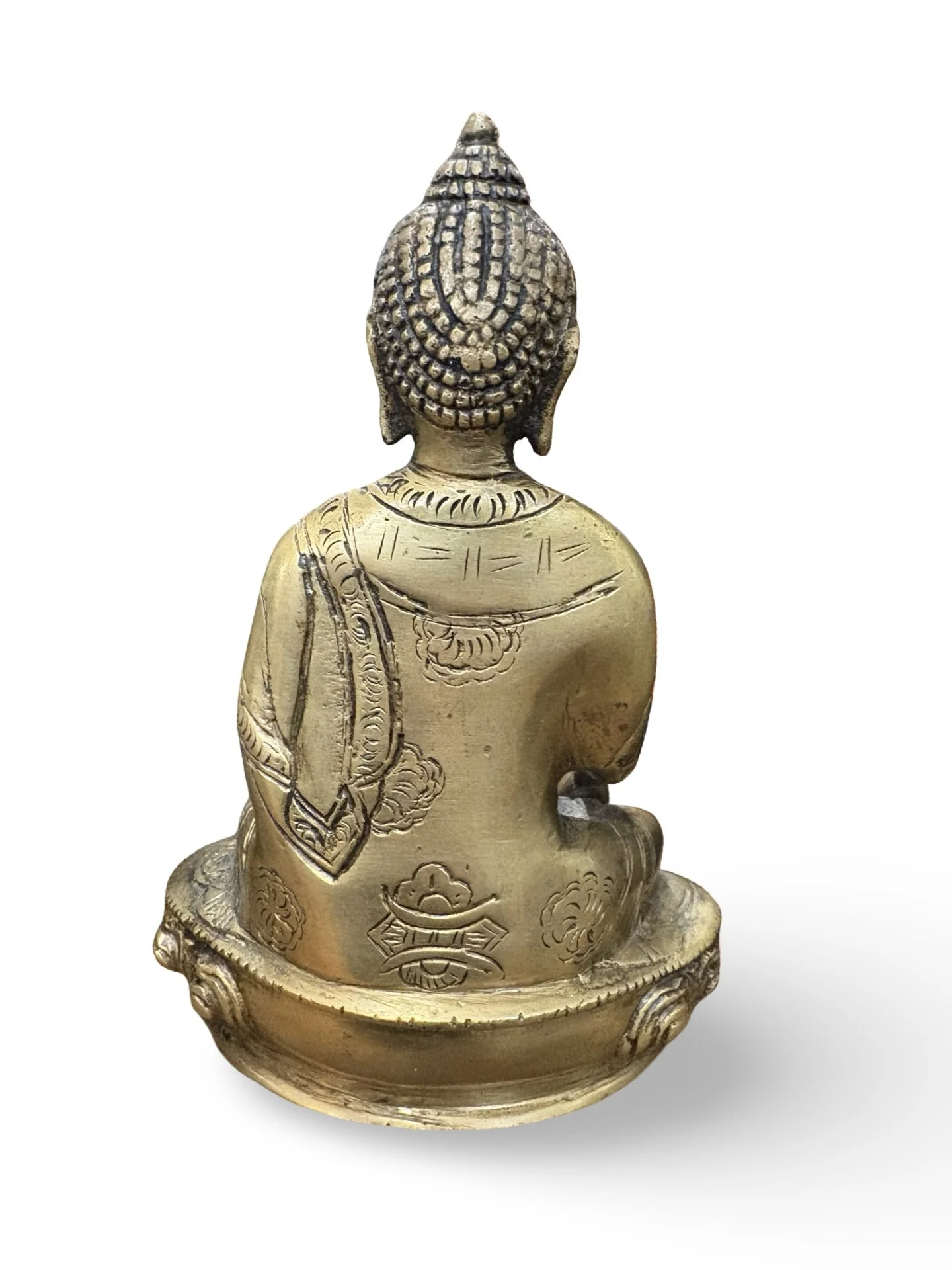
This beautifully detailed bronze depicts Lord Shiva and Goddess Parvati together on a lotus-style pedestal. The Uma-Maheshvara form represents the divine harmony between masculine and feminine energies—Shiva as pure consciousness and Parvati as creative power (Shakti).
Shiva: Identifiable by his coiled hair (jata), crescent moon emblem, and serene expression.
Parvati: Shown gracefully beside him, symbolizing love, fertility, devotion, and beauty.
The intricate base features floral and wave motifs, typical of South Indian temple bronzes.
- South India (likely Tamil Nadu or Karnataka)
- Technique: Lost-wax (cire perdue) casting, a traditional method used since the Chola period.
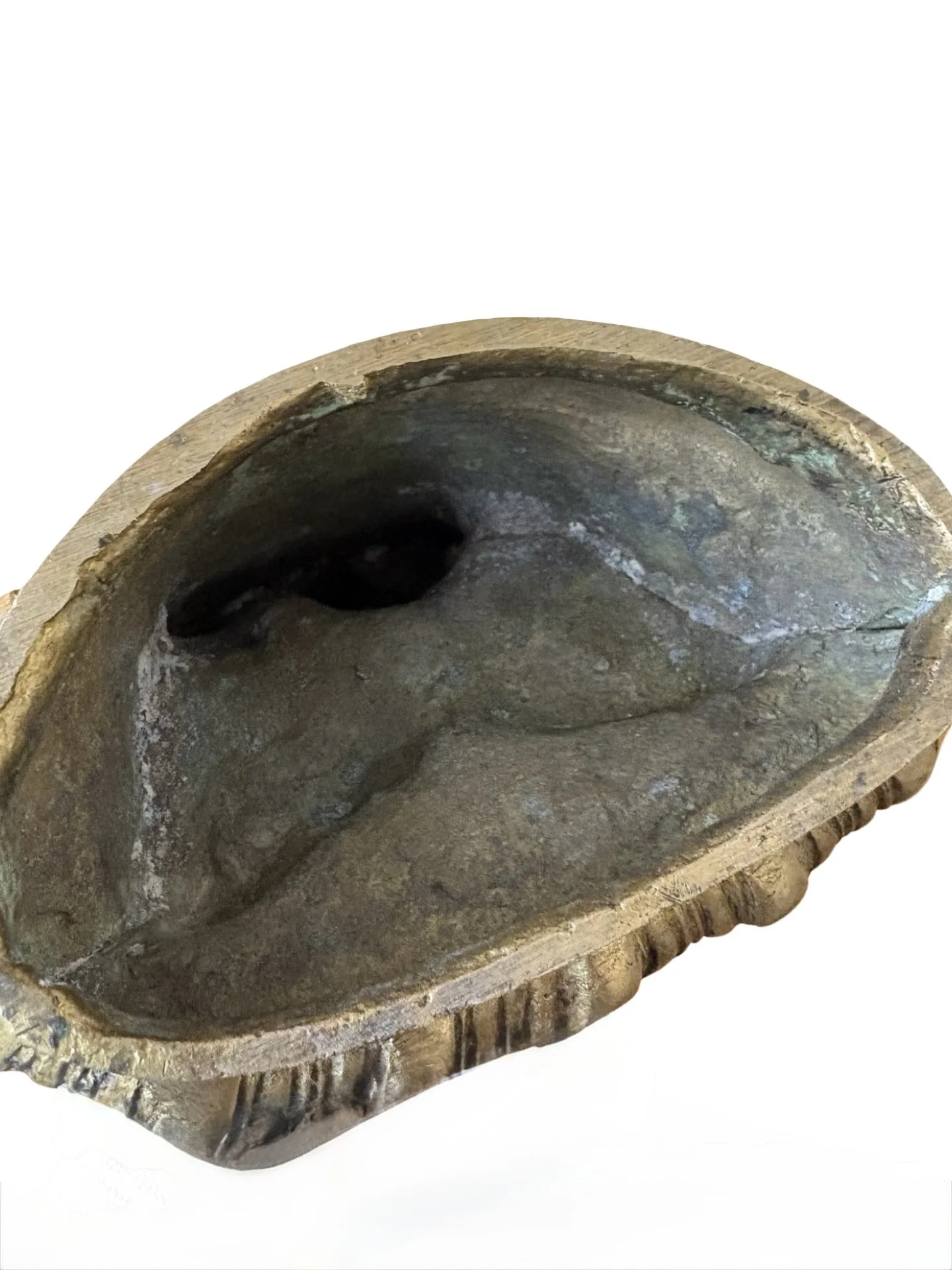
- Base: Features an open underside, characteristic of authentic hand-cast bronzes, which allows for wax drainage and confirms artisanal production.
- Patina: Naturally aged dark bronze surface with minor golden highlights, suggesting a late 19th to early 20th century origin.
The Uma-Maheshvara pair embodies divine unity and is a beloved symbol in Hindu devotion, often placed in temples or family shrines to bless relationships and bring harmony to the home.
Height: 6 inches (15.2 cm)
Material: Solid bronze
Construction: Hollow cast, open base
This beautifully detailed bronze depicts Lord Shiva and Goddess Parvati together on a lotus-style pedestal. The Uma-Maheshvara form represents the divine harmony between masculine and feminine energies—Shiva as pure consciousness and Parvati as creative power (Shakti).
Shiva: Identifiable by his coiled hair (jata), crescent moon emblem, and serene expression.
Parvati: Shown gracefully beside him, symbolizing love, fertility, devotion, and beauty.
The intricate base features floral and wave motifs, typical of South Indian temple bronzes.
- South India (likely Tamil Nadu or Karnataka)
- Technique: Lost-wax (cire perdue) casting, a traditional method used since the Chola period.
- Base: Features an open underside, characteristic of authentic hand-cast bronzes, which allows for wax drainage and confirms artisanal production.
- Patina: Naturally aged dark bronze surface with minor golden highlights, suggesting a late 19th to early 20th century origin.
The Uma-Maheshvara pair embodies divine unity and is a beloved symbol in Hindu devotion, often placed in temples or family shrines to bless relationships and bring harmony to the home.
Height: 6 inches (15.2 cm)
Material: Solid bronze
Construction: Hollow cast, open base

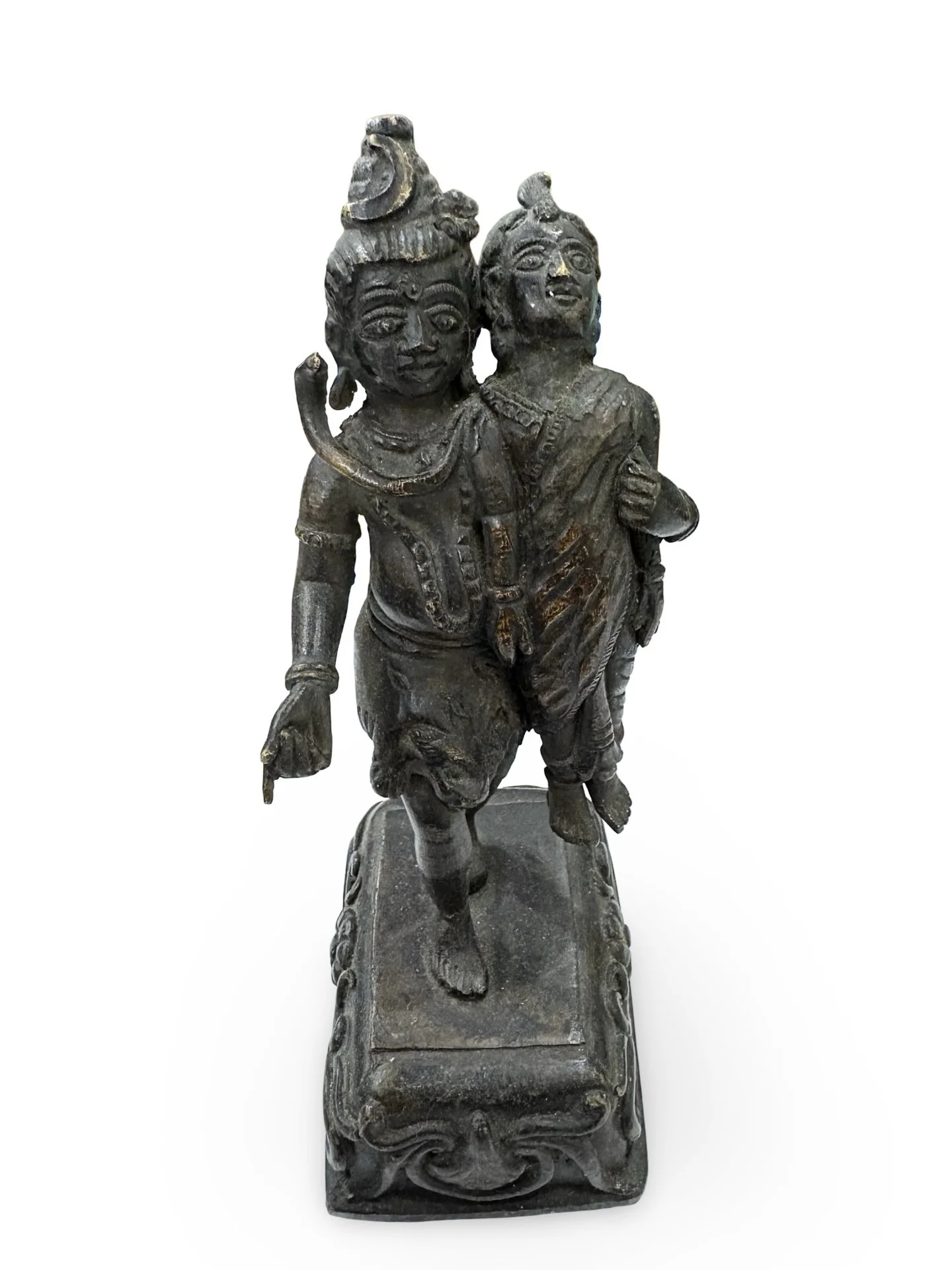 Image 1 of 6
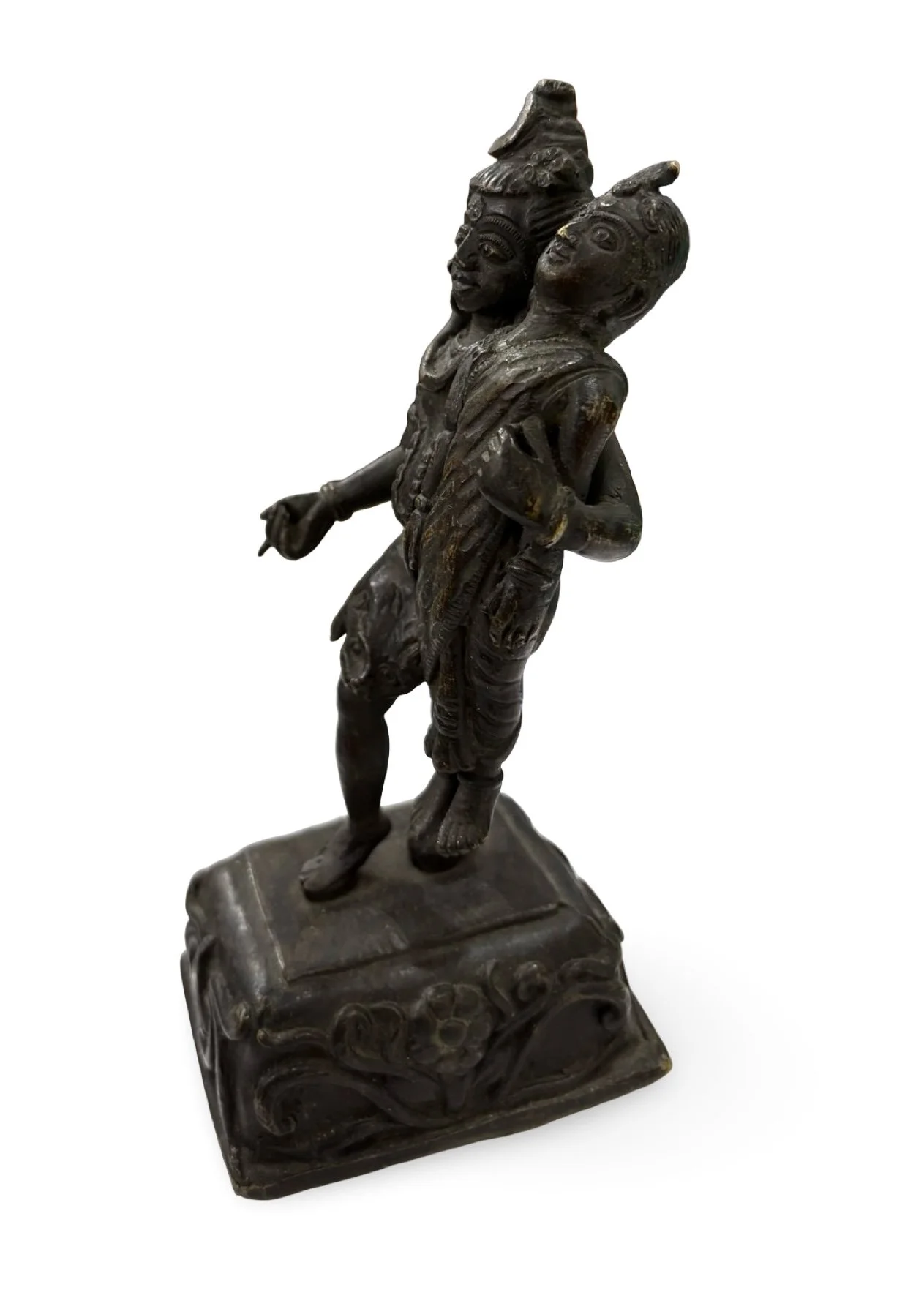 Image 2 of 6
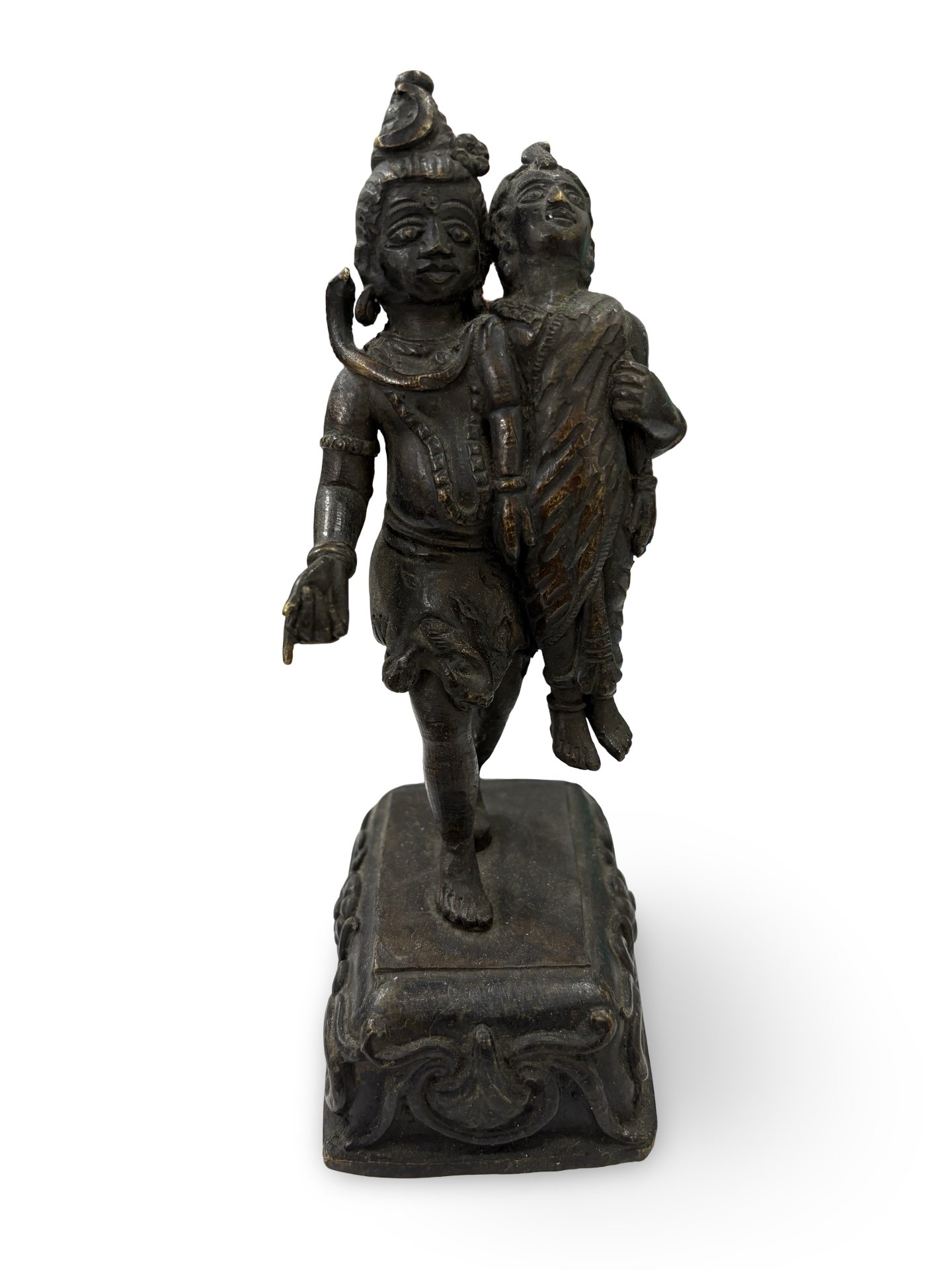 Image 3 of 6
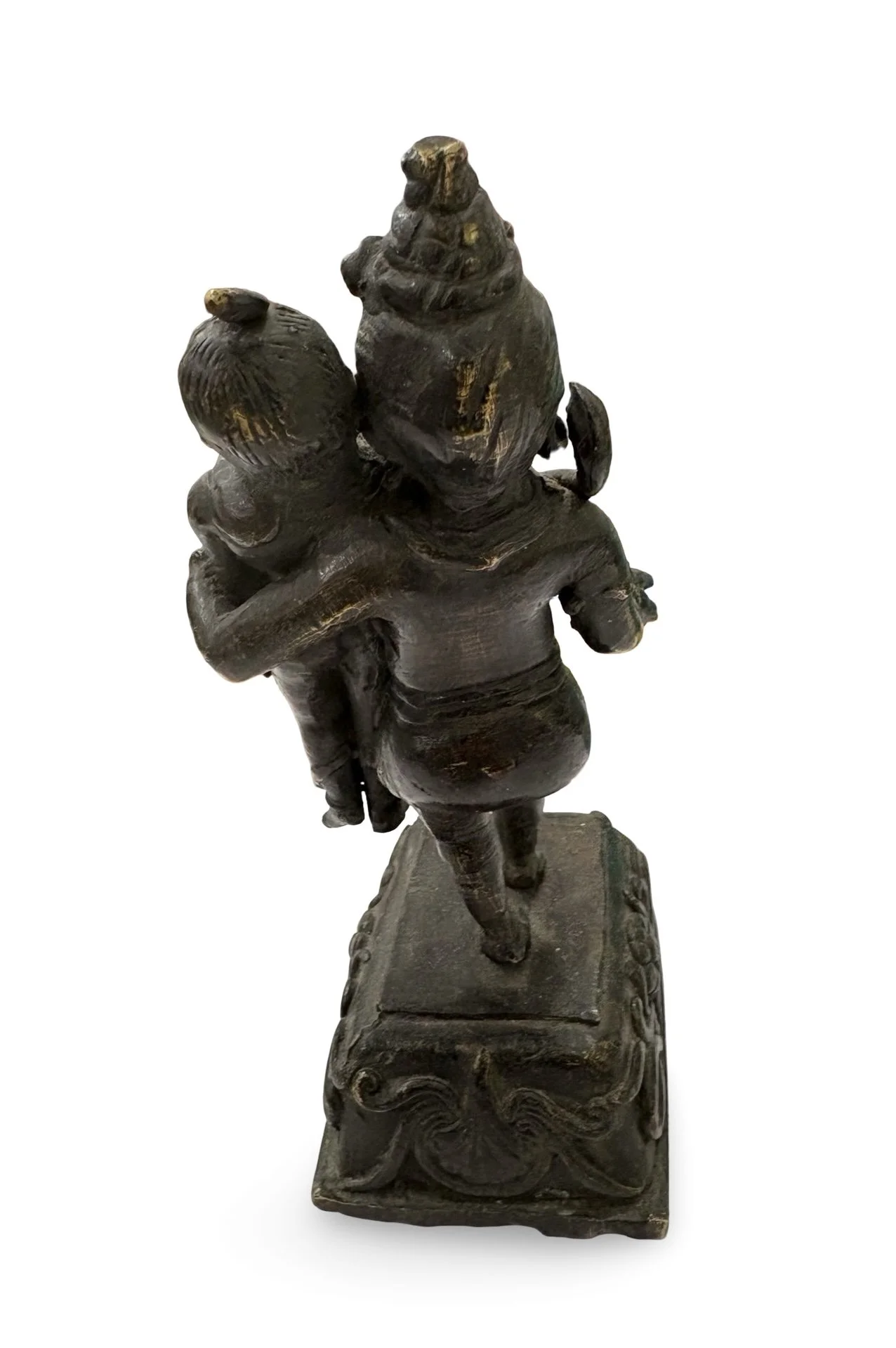 Image 4 of 6
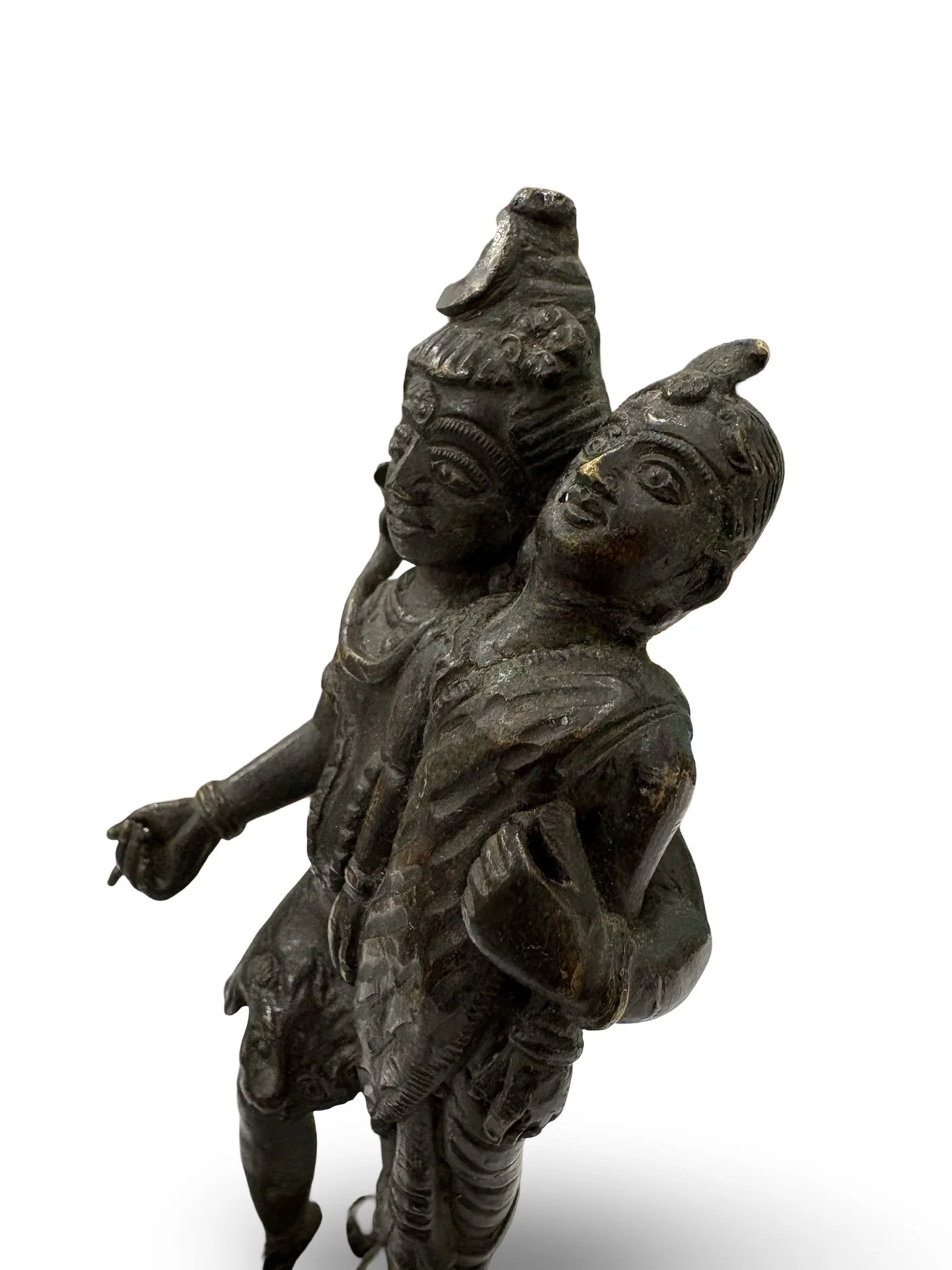 Image 5 of 6
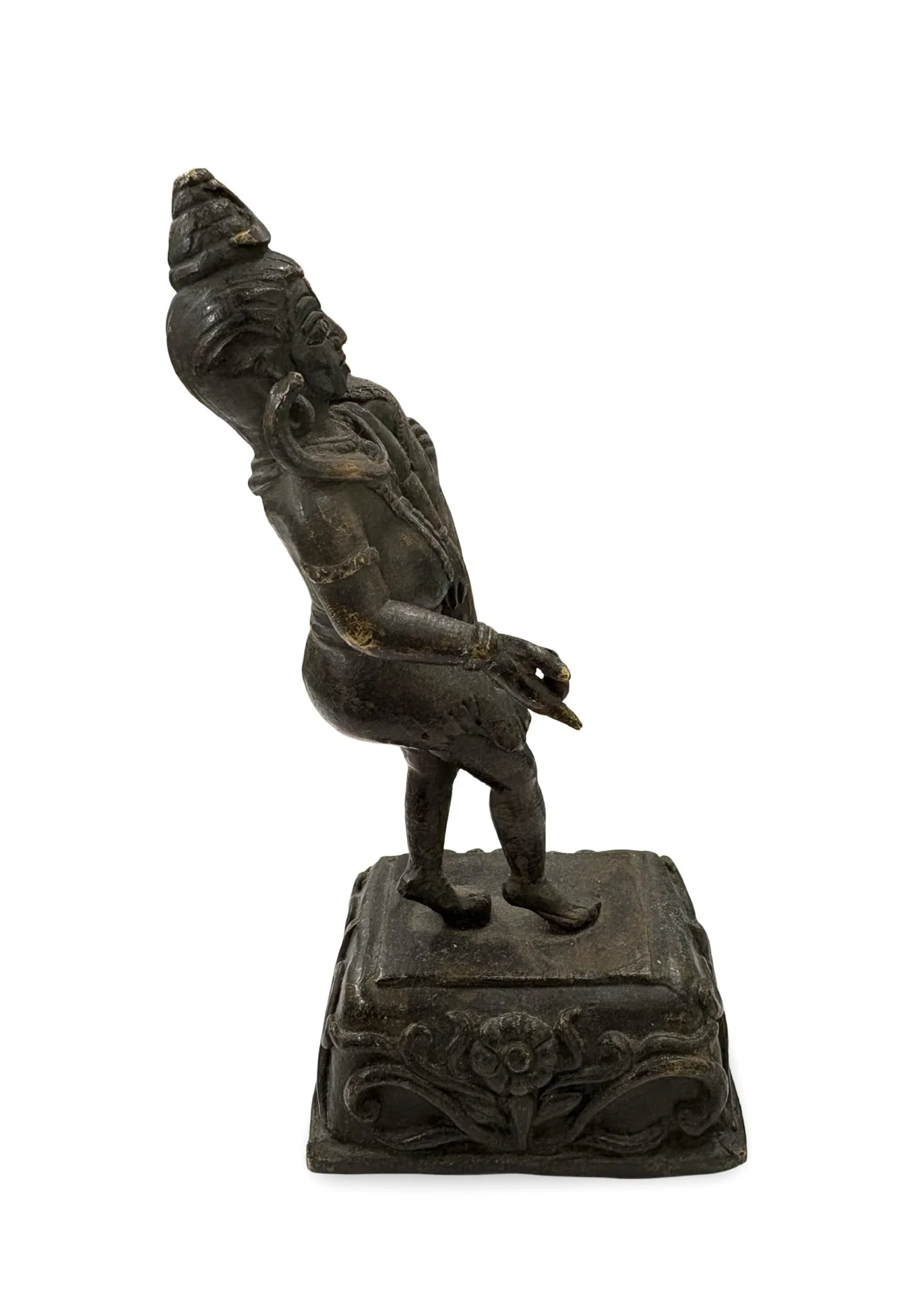 Image 6 of 6